
Energy Ventures Analysis, Inc. (EVA)
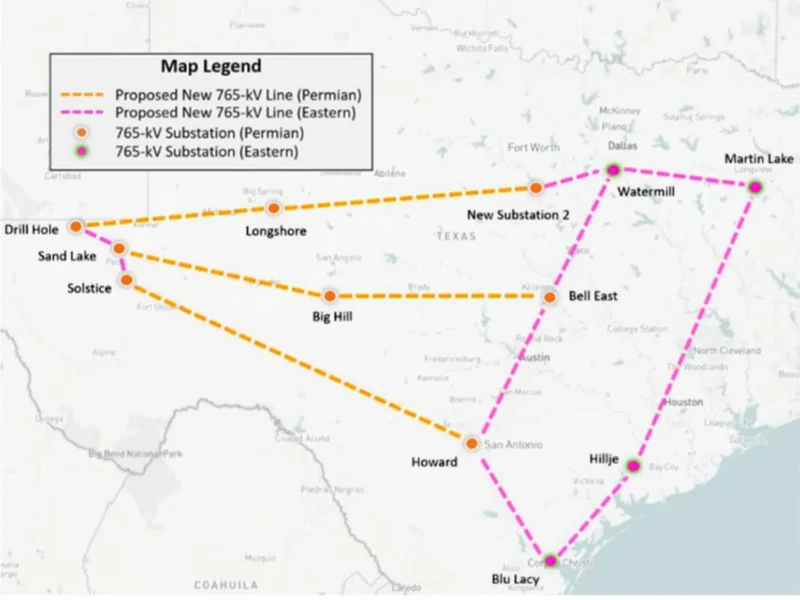
evaluated ERCOT’s Strategic Transmission Expansion Plan (STEP), including the Permian Basin Reliability Plan (PBRP), for the Texas Public Policy Foundation (TPPF), and found that the STEP does not meaningfully reduce the need for new generation. Electricity demand is rising in Texas, with much of the growth expected before the 765-kV lines of the STEP would come online in 2031. Unless demand growth is delayed, significant capacity additions will be required.
In EVA’s analysis, generation additions were only ~6% higher by 2038 without the 765-kV STEP lines. This translates to only ~2% increase in cumulative capital costs when including the costs of the 765-kV transmission lines.
Much of the anticipated load growth is driven by the electrification of oil and gas operations, the construction of large load data center facilities, and other industrial expansions in West Texas. Historically, West Texas has been a net exporter of renewable power, constrained by transmission capacity. However, growing demand in the Permian Basin will provide additional load for excess renewable power to serve, reducing the need for additional transmission from West to.
EVA’s analysis also suggests that the arrival of new around-the-clock demand in the Permian Basin could create favorable conditions for gas generation additions. In fact, extended interconnection timelines are prompting developers to pursue behind-the-meter generation across the country, especially in Texas, which could lead to an overestimation of demand growth and put the PBRP 765-kV lines at risk of becoming stranded assets.
To access the report, please follow the link.